HOMEPAGE | ATLAS & PHOTOGALLERY | EUROPEAN COLLECTIONS | HORTICULTURE | PROTECTION (cz) | CONTACTS | CZECH

HOMEPAGE | ATLAS & PHOTOGALLERY | EUROPEAN COLLECTIONS | HORTICULTURE | PROTECTION (cz) | CONTACTS | CZECH
Czech Cycads

Cycads in Poland
When we started preparing this article we did not expect much, as Poland is not known as a typical cycads growing country. However soon we were surprised by the vast quantities of new plants growing almost in every collection and a number of big historical plants. The African cycad Stangeria eriopus even seemed to be native in this country, being also pollinated successfully. In the following article we therefore cannot mention everything and we focus on the bigger or more important plants.
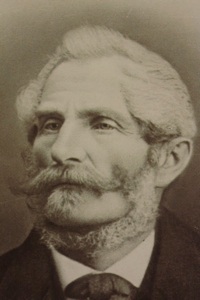
Warszewicz, the Embodiment of XIX Century Discoveries
•Cycads of Poland (pdf, 2003) - Article by Wiesław Gawryś in Polish with an English summary, kindly contributed by Dr. Gawryś
•The Cycads in the Botanical Garden of the Wroclaw University (pdf, 2003) - Elzbieta Bogaczewicz, Magdalena Mularczyk, in Polish with an English summary about a smaller collection
City by City
Krakow
Botanical Garden of the Jagiellonian University in Cracow
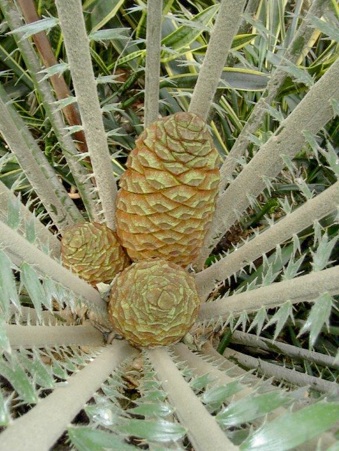
The Krakow University Botanical Garden is seated near the UNESCO protected historical centre of Krakow city close the northeastern Czech border. This garden replaced former aristocratic palace garden. Its logo boasts a Cycas cone. It hosts a beautiful collection of old cycads in the most beautiful Polish city. Cycads are really the main thing in this garden and its staff takes them seriously.
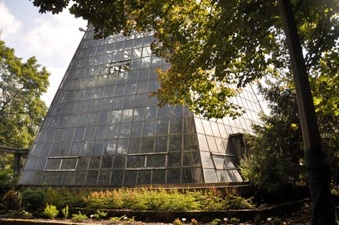
The Palm House is relatively young, it comes from 1966, with architecture somewhat similar to the tall and crystal shaped greenhouses elsewhere more to the east – in the Ukrainian cities of Kiev or Uzhorod. It is also in similarly under financed state. No investment in greenhouses structure or equipment was done at least in decades. However when you walk its corridors, you might immediately recognize something unusual under your feet. This is the only greenhouse I know paved with marble. Even though it is in poor shape their pink color still recall their noble origin in Cuban quarries.
Many of its plants come from the XIX century, even preceding the period when Warszewicz worked here. The most visible plant in this garden is its Cycas circinalis first mentioned in its books in 1864. We had the chance to measure this plant in 2009 and it was 4.4 meters tall. The same greenhouse holds more big cycads: huge old Ceratozamia mexicana and Ceratozamia robusta (both 160 years), two Dioon edule plants (160 years) where one of them is a two headed monster, an alley of old plants of Cycas revoluta (150 years) and another Cycas circinalis. The local Encephalartos horridus plant is over 65 years old, Encephalartos ferox of over 40 years, Encephalartos villosus, a Stangeria, Zamia furfuracea and some other plants. Balcony view in the Palm House hides many small cycads plants including a number of seedlings of Ceratozamias, Stangerias, some cuban Zamias and more. It is not open to the public. The adjacent corridor holds a collection of many cycads seedlings, demonstrating the garden’s interest to enlarge this foremost Polish collection. These last two areas are not open to the public. Another publicly not accessible greenhouse is probably the best place in Europe to see Stangeria eriopus growing and being successfully pollinated and propagated. The Stangeria „bush“ of around ten big mature plants of both sexes grows in one of the smaller greenhouses without public access. This is the place where many EU botanical gardens Stangerias come from, not from South Africa. You can also see a plant of the same species in the main and public „cycad greenhouse“. The plants are over 50 years old. They also pollinate their plants of Ceratozamia mexicana here.
Łódź
Łódź Botanical Garden
The garden grows some interesting cycads, especially the 70 years old Encephalartos caffer, the oldest I know of in Europe. You can find here also the 70 years old Cycas circinalis and Cycas revoluta as well as a 40 years old Stangeria eriopus and some other plants
Lublin
Botanical Garden of Maria Skłodowska-Curie University in Lublin
Thirty years old plants of Ceratozamia mexicana and a Stangeria eriopus are on display in this garden.
Poznań Garden and Palm House
The Botanical Garden of Adam Mickiewicz University in Poznań grows mostly smaller young cycads around 25 years old (Encephalartos ferox, manikensis, Stangeria eriopus, Ceratozamia manikensis and Cycas revoluta and circinalis as well as some common Zamias). So it is much more interesting to go straight to another institution - the Palm House.
Palm House is the biggest greenhouse in Poland. Built in 1929 and enlarged in 1982-92 the Palm House has amassed huge collections of plants, thus becoming one of the biggest institutions of this kind in Europe. It has 17 thousand plants of 700 species and subspecies from the Mediterranean, subtropical, tropical, savannah and desert climates. There is also a rich collection of exotic fish here. You can see here also a huge Macrozamia moorei almost 3 meters tall, around 300 years old and bought after the Australian government recently permitted sales of some of these plants. Over a meter tall Encephalartos lehmanii 150 years old is also worth seeing. The local Encephalartos laurentianus originates from seeds collected in Africa by prof. S. Lisowski and after 20 years has leaves of almost 5 meters long. There is also a decades old Dioon edule and Encephalartos ferox of 15 years.
Warsaw Botanical Gardens
Botanical Garden-Center for Biological Diversity Conservation of the Polish Academy of Sciences in Warsaw has many young and recently acquired cycads. It also presents some decades old stangerias, received from other growers in Poland as well as the 30 years old Ceratozamia mexicana and some younger plants.
Botanical Garden of the Warsaw University has an exceptional Zamia muricata plant, over 51 years old as well as a Cycas taiwaniana over 20 years old, big Stangerias and many more younger plants.
Wrocław
Botanical Garden of Wrocław University
(Greenhouse closed for reconstruction)
Another of gardens close to the Czech border hosts several interesting cycads, including a big Encephalartos hildebrandtii over 100 years old (now deposited in Poznań), old male Encephalartos ferox, more than 40 years old Cycas circinalis and revoluta and some Stangerias. There are also plants of Zamia pumila, Zamia muricata and Zamia integrifolia around two decades old and other plants.
Thanks to
Bogdan Zemanek, director of the Krakow botanical garden for his helpfulness during my two visits in Krakow
Wiesław Gawryś, deputy director of Warsaw botanical garden for providing all the information requested on all other botanical gardens in Poland.
Bartosz Jan Płachno, Department of Plant Cytology and Embryology, Jagiellonian University / more info on Krakow Cycads
Michał Śmiłowski, główny specjalista - biolog, Palmiarnia Poznańska
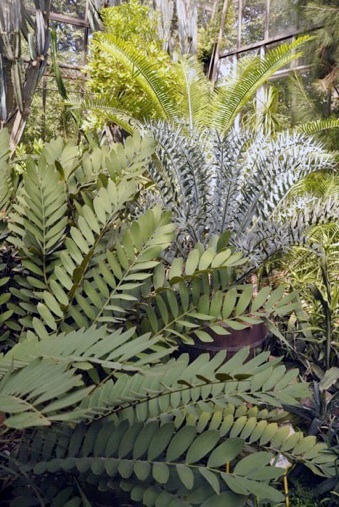
Encephalartos laurentianus in Polznan Palm House originates from seeds collected in Africa by prof. S. Lisowski.
Cycads in Europe & other countries
We are gradually mapping the European collection of cycads. Until now, we have done the following. Read more in our articles
•Czech Republic (CZ) - some of the text can be also found on our English homepage - with some of the oldest Encephalartos altensteinii and the tallest Cycas circinalis and Microcycas calocoma in Europe as well as a nice collection of fossil cycads
•Belgium (CZ) - This article adds information to the text published by Whitelock on Encephalartos laurentianus, the species described from the plants from the Belgian Congo, still in collection in Meise
•Cuba (EN) overview of the 8 Cuban species according to Flora de Cuba, with rare habitat photos - isolated country with not much information published abroad. The only article on the web.
•Denmark (EN) with the oldest Zamia lindenii in Europe
•Ireland (EN) - the birthplace of Ceratozamia fuscoviridis in Dublin
•the Netherlands (EN) with a beautiful collection in Leiden
•Poland (EN) with some historical plants from the original Warszewicz garden in Krakow, a fantastic group of Stangeria and 200 yrs old plants of Ceratozamia mexicana
•Portugal (EN) - see also our photo gallery from Lisbon
•Russia (EN) - CVs of Küster, Katzer and Perovsky after whom cycads were named
•Slovakia (EN) - with one of the EU well known cycad seed sellers
•Sweden (EN) with probably the largest Zamia pseudoparasitica on public display in Europe
We are usually using the names of the species as described by the gardens, even though sometimes a re-evaluation of the description might be needed.